How to Protect Your Well-being

How to Protect Your Well-being

What is this picture? Any guesses?

Central Park in New York City

Why was Central Park created? Why does it make sense to have such a big park in the middle of a giant city?

Couldn’t that space be used for productivity? More buildings? More businesses? More revenue? How much revenue per square ft. do you think this space could generate?

The park is surrounded by massive skyscrapers. Relative to the space, a few more skyscrapers wouldn’t take up that much space of the park, right? How many office spaces could that be?

Central Park is 843 acres in size! It’s 2.5 miles from north to south and 0.5 miles from east to west.

It’s a National Historic Landmark and considered a masterpiece of landscape architecture.

Do you think whoever’s idea this was to have such a big, protected park in the city is crazy?

Central Park was created in 1858 to address the recreational needs of the rapidly growing city. Its purpose was to offer urban dwellers an experience of the countryside, a place to escape from the stresses of urban life and to commune with nature and other fellow New Yorkers.

In fact, Central Park has its own conservancy to preserve and celebrate Central Park as a sanctuary from the pace and pressures of city life, enhancing the enjoyment and well-being of all.

Why are we talking about Central Park?

Where is the Central Park in your life? How do you escape the pressures and stresses of life?

What do each of us have in common?

We are human beings.

As humans, we have needs and emotions that must be attended to, right?

What do you need for optimal personal well-being?

Enter the 4 pillars of well-being or resilience. You may be familiar with these 4 pillars which is part of the U.S. Air Force Comprehensive Airman Fitness.

Resilience Mental Physical Social Spiritual Logo

Think of these 4 pillars as your own Central Park, or your greenspace. Let’s break down each part.

As we review each one, ask yourself, “what do you have that’s working and what do you have that’s not working?”

Mental. Being able to cope with mental stressors and challenges. Paying attention to your needs and feelings. Your thoughts control your energy.

Physical. Being able to adopt and sustain a healthy lifestyle. Exercise, nutrition, and sleep are all important. Connecting mind and body. Strong bodies help build strong minds.

Social. Being able to network. Building and valuing interpersonal relationships. Social connections widen perceptions and grow character.

Spiritual. Being able to adhere to beliefs, principles or values needed to persevere and prevail in accomplishing missions.

What else is on the picture above with the pillars of resilience?

The arrow that points in both directions. What does that indicate to you?

Each pillar overlaps. Investment in one pillar spills into other pillars.

For example, let’s pretend you are training for a marathon. First of all, that’s a mental goal, full of positive thinking.

It’s also a very physical goal, meaning you will need to progressively train over time. You’ll need to feed your body well. You’ll need rest and sleep.

Many people that train for marathons train in groups. This is a social activity. You might be training with people that are more experienced than you, so you can learn from them. They can share tips and tricks. They will encourage you to keep going when you want to quit.

Running a marathon can also touch on the spiritual pillar. It will take perseverance to complete this goal. It’s a goal that is bigger than you.

If you are your own conservatory for your pillars, how are you doing? How well are you protecting these areas?

The Central Park conservatory works year-round, rain or shine to maintain and restore every inch of the park.

How well are you protecting your greenspace?

What rhythms do you need to add into your life? Daily, weekly, monthly, quarterly, yearly?

Each one of us has 52 weeks a year; 365 days. Is a couple weeks, or 14 days, of vacation a year sufficient to maintain or build your 4 pillars?

How are you protecting your greenspace so that you can show up for your family, your work and team, for yourself? You can’t pour from an empty glass, and you can’t help others without putting on your mask first.

Maybe this feels overwhelming because you need a lot of work in 2-3 of these pillars. Or maybe you know exactly what you need to do in only 1. Whatever the case, think about what is one small change you could make today?

Start there and build. Become your own Conservatory.

Unlocking the Power of Optimism for a Better Life

Unlocking the Power of Optimism for a Better Life

It’s no surprise that we live in a world where bad things happen. Especially if you watch the news. It can be quite depressing. It can leave us feeling pessimistic and “waiting for the next shoe to drop” so to speak.

What if you could flip the pessimism on it’s head and be more optimistic? Have you ever wondered the impact that optimism could bring to your life? Optimism might not be what you think it is.

In fact, what words or phrases come to mind when you hear the word optimistic?

  • Sunshine and rainbows
  • Rose colored glasses
  • Always happy

What about words like:

  • Successful outcomes?
  • Confidence?
  • Positivity?
  • Hopefulness?

Or phrases like:

  • Make lemonade out of life’s lemons, or
  • The glass is half full

The reality is that optimism is not all sunshine and rainbows. It’s not looking at the world through rose colored glasses either. Optimists are actually quite realistic. And just because you are an optimist, it doesn’t mean you are always happy. Nor does it mean that if you are happy, you are an optimist.

Optimism is, however, the focus of successful outcomes. It is having confidence, positivity, and hopefulness. It’s more than just being positive; it’s having a bright outlook on your future and doing what you can to make your situation better.

Optimisim is having a state of positive beliefs. Optimism is the tendency to notice and expect the positive, focus on what you can control, and take purposeful action. It is how we interpret and perceive the world around us and it’s about the action we take.

There is scientific studies on optimism. It’s been proven that it’s a cornerstone of wellbeing.

Science has also proven that optimistic people are:

  • more resilient
  • more productive, high performing
  • less likely to suffer from depression, anxiety, and burnout
  • goal setters and planners
  • more hopeful for the future.

They:

  • believe they control the direction of their lives
  • are better able to cope and recover after set-backs
  • are healthier and recover faster.

How do you cultivate optimism for your wellbeing?

When a challenge arises, do you expect the negative or expect the positive? Our brains are wired to look for what we believe. I

f you believe that you won’t achieve a goal, you are correct. Your brain will look for evidence to support that belief.

The opposite is also true. If you believe in a positive outcome, you are correct. Your brain will look for evidence to support that belief.

When a challenge arises, do you see a threat or an opportunity? Are you passive when a challenge arises or do you accept and control what you can?

Do you ruminate on the negatives of a challenge or do you focus on solutions? Do you avoid or take purposeful action? Do you isolate or hide when challenges arise or do you reach out for help?

If we are truthful, I’d imagine that we could fall on the spectrum of low or high optimism depending on the day or the circumstance. We are human after all. Optimism doesn’t mean you can’t be upset if things fall apart or get offtrack. However, it is a belief that you can make your situation better. It’s the realistic viewpoint that if everything falls apart, we get to choose how we pick it back up again.

How can you learn to be more optimistic?

First, we are aware of our thought tendencies. Then, we reframe from a pessimistic viewpoint to an optimistic thought process. It’s an intentional decision to fix the negatives and more forward…positively move forward.

Here’s your call to action.

  1. Think about 1 challenge that you’ve faced this year.
  2. What happened?
  3. How did you overcome it or pivot?
  4. What did you learn that you can apply to future, unknown challenges?

We move at lightening speed in our lives. It’s so easy to overcome or accomplish a goal and swiftly move on to the next thing. Taking a moment of reflection is important to realize how far you’ve com and how you navigated challenges.

Those reflections could help you flex your optimism muscle for future challenges.

Feelings and Resiliency

Feelings and Resiliency

My full time job has been marked with lots of feelings this year.

My company has had 15 – 20% headcount reductions (read as layoffs).

I was in the first round of reductions. Thankfully, I am still gainfully employed.

That is not true for many people, including the team I was a part for the last 2 years.

My former team’s positions were eliminated entirely. At the end of the first round, 2 teammates elected to retire or voluntarily leave; 4 were left standing (meaning they were laid off); and 3 of us were placed in other positions.

How rapidly it all happened was shocking. One day we were a team and the next I would not see some of my team members anymore.

Corporate world can be and is brutal. I’ve personally experienced headcount reductions 4 times in my 14 year career so far. I’m certain there will be more.

Beginning at the end of 2024, my team and others began preparing employees for what was coming.

The uncertainty that lingers for months in advance of knowing if you have a job or not is stressful!

We lean on tools to strengthen our resiliency during these times. These tools equip us for what will ultimately come. They remind us to be flexible and lean into strengths. Focus on what we can control and loosen our grip on what we cannot.

They are good reminders during this time. And while these tools don’t take away the hardship of enduring one of these reductions, it can help shift our mindset..

In February of 2025, I gave a presentation about Feelings and Resilience. Here is what I shared.

Referring to the Feeling Wheel, if you had to name the feeling(s) you have right now, what would it be?

Are you surprised that there are so many feelings? And yet, they can connect back to 6 core feelings.

What feelings do you tend to ignore?

Do you think it’s possible to ignore “bad” feelings and only experience “good” feelings? Why or why not?

Early this year, I finished reading Brene Brown’s book, The Gifts of Imperfection.

What I didn’t know before I read the book was how much resiliency is incorporated into imperfection.

Brene writes, when we become more accepting of uncomfortable feelings, we become more flexible and can enjoy life more fully even with feelings of discomfort.

In her book she notes:

  • Shame, guilt, fear, despair, disappointment, and sadness are difficult feelings that tend to cause vunerability, discomfort, and pain.
  • The most powerful feelings we experience have very sharp points, like the tip of a thorn.
  • Which usually leads to modes of distraction to get away from the uncomfortable feelings. Such as…mindless scrolling, eating, drinking, shopping, staying busy, work, choas, etc.

Everyone moves away from feelings of discomfort.

We also must remember that we cannot selectively ignore feelings.

“When we numb the dark, we numb the light.”

We can’t make a list of “bad” feelings and say, “I’m going to ignore these” and then list the positive feelings and say, “I’m going to fully engage in these!”

It doesn’t work that way.

Let’s explore the feeling of Joy.

To love and/or believe in something with your whole heart; to engage in a life that doesn’t come with guarantees…these involve the risk of vulnerability and often pain.

AND

Great joy can come from them.

Feelings of hopelessness, fear, blame, pain, discomfort, vulnerability, and disconnection sabotage our resilience and well being.

The only experience broad and fierce enough to combat a list like that is the belief that we’re all in this together and that something greater than ourselves has the capacity to bring love and compassion into our lives.

Practicing spirituality is what brings about healing and creates resilience.

Spirituality is being able to adhere to beliefs, principles or values needed to persevere and prevail in accomplishing missions.

Here is an example of the ways I’ve leaned into my spirituality practice.

Having a sense of purpose, meaning, and perspective in our lives allows us to develop understanding and move forward. Without purpose, meaning, and perspective, it is easy to lose hope, numb our emotions, or become overwhelmed by our circumstances.

We feel reduced, less capable, and lost in the face of struggle. The heart of spirituality is connection and through that, we won’t feel alone.

How do you know that you are ignoring uncomfortable feelings?

Recognizing and leaning into (not away) from discomfort of vulnerability teaches us how to live with joy, gratitude, and grace.

We live in a both/and world.

We can experience discomfort and joy. They are not mutually exclusive.

When you have the awareness, what can you do to practice leaning into the discomfort?

How can you lean into the discomfort of vulnerability and let joy in as well?

Exercise Prompt:

Hold up both hands, palms up and open. Can you practice holding the feelings of discomfort in one hand and the “good” feelings in the other hand? In fact, write on one open palm your feelings of discomfort and then write the “good” feelings on the other open palm. Practicing holding and experiencing both.

An Overlooked Tool for Leaders

An Overlooked Tool for Leaders

Are you a leader of people?

Are you an influential leader? Influential doesn’t always mean you have direct reports. It means you collaborate with and guide others toward outcomes, often without formal authority. This ability to influence is essential for moving initiatives forward and being successful in your role.

Hint: we are all influential leaders!

This applies in the workplace, in your community, and at home. For example, parents—especially of teenagers—quickly learn that influence is far more powerful than control. The same principle applies to managers, project leads, and peers working across departments.

Too often we think leadership means being “the one in charge” with a team reporting to you. In reality, the most effective leaders know that influence, not control, is what drives collaboration, innovation, and long-term results.

One area all leaders have in common is working with people. Whether it’s direct reports or those you’re influencing to move initiatives and projects forward, managing and influencing people is a complex skill set—one you learn and refine over time.

Leaders are not mind readers. People are many shades of gray, shaped by their unique experiences, perspectives, and stories.

Every individual sees the world through their own lens, influenced by both their career and personal life. Effective leaders embrace this complexity and work to understand, adapt, and connect.

Leadership can also reach frustration and overwhelm quickly.

With constant technological change, leaders are stretched thin—running from meeting to meeting while processing an overwhelming amount of information.

The human mind was not designed to handle this relentless pace with clarity.

In such a fast-paced world, we’ve lost the art of slowing down. Reflection has become a forgotten tool.

Slowing down can feel archaic when demands push us to go faster and faster.

But the question remains: What are we missing by moving so fast? How would you even know what’s slipping past you when life is lived at lightning speed?

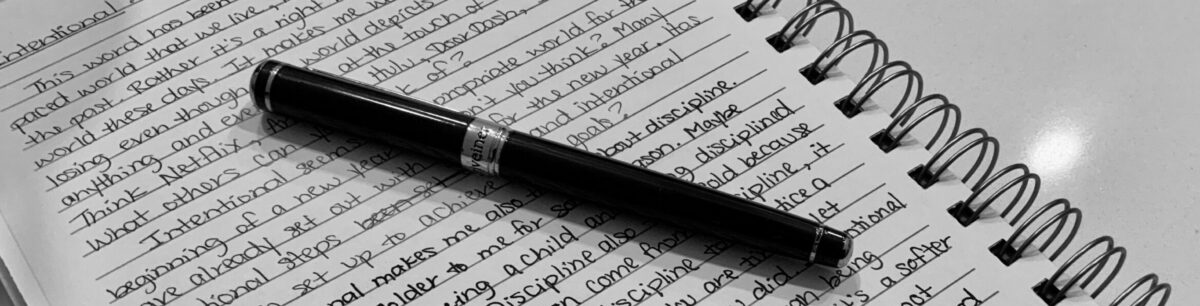
One underutilized tool for leaders is keeping a journal. Not typing notes into a phone or laptop—but physically writing in a journal with a physical pen and paper.

The physical act of writing slows down the mind automatically.

It creates space for reflection, and helps leaders process their experiences, challenges, and decisions in a deeper way.

It allows leaders to know and understand their unique perspectives. Which in turn will enhance their decision making every day.

A leader’s unique perspective is the source of creativity and competitive advantage.

In today’s AI world, tapping into creativity and having a competitive advantage is paramount.

Without slowing down and using journaling as a tool, we lose the art of listening to ourselves and our innate wisdom.

How do you create a discipline of journaling?

  1. Don’t over complicate it!
  2. Buy a journal.
  3. Set aside 15 minutes of uninterrupted time either at the beginning or end of your day to journal.
  4. Block that time on your calendar!
  5. Close your computer.
  6. Silence your notifications on your phone.
  7. Set a timer for 15 minutes.
  8. Write.

“Ok, great”, you might say. “But, what in the world do I write about? Especially when this feels like a weird, new thing to do?”

Great question!

Journal Prompts for Leaders.

Pick one to get started. What you journal about could either be personal or professional.

  1. What has been at the forefront of my mind today?
  2. What is keeping me up at night?
  3. What has been a common theme this week/last week?
  4. What are my priorities? Do those priorities stack up against the work I’m doing and meetings I’m attending?
  5. What needs to change?
  6. What am I missing?
  7. What is a circular thought pattern I’m having that I can’t find a solution?

Bonus Tips:

  1. Let yourself write whatever comes to mind.
  2. Do not have an agenda.
  3. No judgements in what you write about or don’t write about.
  4. Let the writing flow.
  5. Don’t be surprised if you start writing about one topic and you finish on another topic.
  6. Trust the process.
  7. Trust that whatever you write down is exactly what needed to be written and reflected upon.
  8. You just might surprise yourself.

Asking ourselves questions and slowing down to reflect brings us back to what is meaningful, what we believe in, and overall gives us purpose.

And if leaders reconnect to their purpose, that purpose will flow through them to those they influence. <– this is motivating and inspiring! It will have a ripple effect on your team and those you work alongside.

And all of this is a great ROI!

Challenge: Commit to journaling 15 minutes everyday for a month. Then, reflect on how it helped and enhanced your leadership.

In a world where we feel like we can’t slow down, it’s often exactly what leaders need.

For more reasons to journal, check this blog post: 12 Reasons to Keep a Journal

Emergency Funds: Why is it Important & How Much is Enough?

Emergency Funds: Why is it Important & How Much is Enough?

Life happens, right?

It happened to us recently. A few Sundays ago, I was in the bathroom getting ready.

My husband, Jeff, was in the attic. Some of you are already anticipating what I’m going to tell you. 🫣

He was in the attic inspecting how much electrical wire we had to complete a project.

His footsteps sounded hard and loud!

Then, a very loud crack, crash, and I came running out of the bathroom into the bedroom to see what in the world was happening.

It sounded like the house was falling in.

And it kinda did…Jeff fell through the ceiling of our bedroom.

Lovely.

He wasn’t hurt. Thank goodness!

He was able to catch himself before his whole body came through the ceiling.

The damage was done. A Jeff sized hole in the ceiling of our bedroom.

Of course, Jeff was leaving for a work trip the next day too. 🤦🏻‍♀️

Emergency Funds: Why is it Important & How Much is Enough?

We managed to get the hole covered with plywood, a trash bag, and tarp before he left for his trip.

My biggest concern while he was gone is I didn’t want the heat coming into the house from the attic. Hello late June in Houston = HOT! And I didn’t want any critters crawling in from the attic either!

A few weeks later, we were able to get someone to come and patch it for us.

Why an Emergency Fund?

Accidents happen as does life stuff, right? This is a great example!

This made me so thankful for our emergency fund that we have in place. Which meant, other than the inconvenience, we didn’t have to worry about it. We had the money to have it fixed. Cost and labor was about $350.

This is not a brag post about our emergency fund. This is a post to ask, “are you prepared financially when accidents and life happen?”

I’m pretty sure you’ve experienced a car breakdown, a flat tire, the kitchen sink leaking, a toilet overflows, the dryer goes out, etc. Feel free to add to this list.

When these things happen, they are ALWAYS inconvenient.

If you put space between yourself and the life happens stuff, it will only ever be an inconvenience.

The space or distance you create between yourself and the life stuff is called an emergency fund.

You can also think of an emergency fund as protection from life stuff.

How Much is Enough in an Emergency Fund?

Everyone should have, at minimum, $1,000 in an emergency fund.

This is true if you are a college student or someone that has a full time job and is working toward financial goals, such as paying off debt.

Now, if you have no consumer debt (no car, student loan, credit card, etc.), then the next step would be to grow your emergency fund to 3 – 6 months worth of expenses.

How much is 3 – 6 months worth of expenses? Great question!

Your budget would be a great tool to help you find your living expenses. How much are you spending to live each month?

These expenses would include:

  • Rent or mortgage payments
  • Utilities – water, gas, electricity, internet, phone
  • Transportation costs – gas, tolls, etc.
  • Food – groceries, not restaurants
  • Insurance – car, house, renters’, etc.
  • Medical expenses – copays, prescriptions, etc.
  • Pet expenses – food, medical, etc.

Imagine you just lost your job. What do you do? How are you going to live?

I recently went through an organizational restructure in the company in which I work full-time.

Fortunately, I have a job now. However, many of my teammates were laid off. What do you do in those circumstances?

One way to prepare is to have 3 – 6 months worth of expenses saved to help create space or protection between you, your family, and a major life event… like job loss.

This will give you room to breathe and time to find your next job.

Life stuff happens. It’s not fair when it does.

But, you know it will happen, so there is no reason to delay getting an emergency fund started if you don’t already have one.

Tip: Emergency fund money should be in its own separate savings account. Do not include in your checking account.

Next week, let’s talk about ways to save your first $1,000 in your emergency fund.

6 Ways to Know If Coaching is Right for You?

6 Ways to Know If Coaching is Right for You?

Meet My Ideal Client

You don’t need to be in crisis to benefit from coaching. You do, however, need clarity, curiosity, and a desire to grow. Whether you’re navigating a career pivot, leading a team, getting your finances in order, or simply longing for a more grounded life, the type of coaching I offer creates the space to pause, reflect, and move forward with purpose.

So how do you know if coaching with me is right for you?

Let’s take a look.


You Want to Grow, Not Just Survive

You may feel capable, but also stuck. You’ve read the books, listened to the podcasts, made the lists, and still aren’t moving the needle the way you hoped. Coaching helps you break out of survival mode and step into strategic, intentional growth.

You’re Ready to Get Clear and Take Action

Many of my clients come to coaching with vague goals. They express a desire such as “I want a better job.” Some say, “I need to stop overspending.” Others mention, “I just want to feel more at peace.” Coaching helps define what “better,” “stop,” and “peace” actually look like, and then map a path to get there.

You’re Open to Support and Feedback

Coaching is not consulting or therapy; it’s a collaborative process. I’ll ask the questions you may not have thought to ask. I’ll notice patterns, challenge assumptions, and offer frameworks to help you see and move differently. That works best when you’re open to honest reflection, feedback, and practical support.

You Want to Lead, Communicate, and Live with Integrity

Whether you’re leading a team or leading your own life, how you show up matters. I help you improve communication with peers, teams, and senior leaders. We work on presence, empathy, clarity, and confidence…not as buzzwords, but as daily practices.

You’re Done Hustling Without a Plan

You don’t have to white-knuckle your way through life. If you’re tired of feeling busy but ineffective, you’re in the right place. If you want to shift from spinning your wheels to seeing real progress, this is where you belong. We’ll use proven tools to help you slow down, set intentional goals, and make peace a priority.


What You Bring to the Table: The Client’s Role

Great coaching is a two-way relationship. If you’re considering coaching with me, here’s what I ask of you:

  • Have a goal in mind that you want to achieve.
  • Recognize that you haven’t been successful reaching it on your own.
  • Be curious about what’s missing and open to support.
  • Show up prepared to discuss your progress and challenges.
  • Be ready to apply the resources and tools we discuss.
  • Be open to transformational change and the work required to get there.
  • Be willing to experiment with new strategies.
  • Be committed to your goals, and persistent in pursuing them.

If that sounds like you, coaching can be a powerful catalyst. Let’s get started!

If you’re not quite there yet — that’s okay too. Sometimes readiness is the first step.


Let’s Talk

Curious if coaching is right for this season of your life? I’d love to hear your story and explore how we might work together.

Let’s connect and start mapping your next step with purpose, clarity, and momentum.

← Back

Thank you for your response. ✨

12 Reasons to Keep a Journal

12 Reasons to Keep a Journal

I was just in my prayer journal and reading through the last few entries. One paragraph in an entry expresses how I feel like I’m wandering through the wilderness. It’s much like what the Israelites did, (Deuteronomy 29:5-6). I feel like I’m wandering because where I work full-time is restructuring the entire company, which includes headcount reductions (layoffs). I wrote about one of the ways I’m navigating this uncertainty last week. I’m in the middle of the unknown and living in an in-between place. The ways I’m choosing to battle through this is reminding myself of what is true. Did you know that truth telling = confession? To confess is to tell the truth, which is exactly what Perspective Confessions is all about. Below is a list of reminders I wrote in my prayer journal. It includes tidbits from journal entries from the months and weeks leading up to the restructure.

12 Journal Confessions of What is True

  • Give the feelings of uncertainty, fear, numbness, and disconnection to God
  • Stop running away from hard feelings. Journal to process the feelings and/or talk with a trusted friend or therapist.
  • Surrender to Him. I am not in control. God is in control. Have faith and trust in Him. Mark 9:24
  • Inviting Jesus into this weird place with me when I can’t seem to surrender it just yet
  • Praying a simple prayer asking Him to “lead the way”.
  • Jesus is Lord – John 13:13
  • God is unchanging – Isaiah 40:8
  • God loves me – 1 John 4:16
  • I’ve been found worthy without works. I don’t have to prove myself through work.- Galatians 2:16
  • My identity is not my work or my job title, it’s Jesus Christ – Galatians 3:26
  • Move forward one step at a time
  • Focus on Him – 1 Chronicles 16:11

12 Reasons to Keep a Journal

If you don’t already, I recommend keeping a journal. I don’t write in my journal every day. I don’t even write in it every week. However, it has been a practice in my life over the years. And, it has proven to be a powerful tool.

  1. It allows the processing of thoughts and feelings.
  2. It provides the opportunity to go back and read through experiences at different points in time.
  3. It’s a tool that helps you reflect on your mindset during past hardships.
  4. It helps you remember how things turned out.
  5. Reflection is a powerful tool. Hindsight is 20/20 after all.
  6. Journaling is a map that tells you where you’ve been and how far you’ve come. It helps you hold yourself accountable for how you got to where you are. It also helps you decide what you’d do differently, if anything.
  7. Reviewing the words you wrote during a hardship will remind you later of your strength.
  8. Articulating in written words helps your brain think more clearly.
  9. It gives swirling thoughts a home.
  10. It helps make clear what is unclear.
  11. It helps you navigate challenges.
  12. Keeping a journal slows you down. The world is so loud, busy, and fast. It’s easy to lose yourself in it all. One day you look up and don’t remember how you got where you are. If we aren’t careful, life passes us by without our permission.

Your Turn! Journal Prompt

A journal is a great way to check in with yourself periodically. Put 10 minutes on the timer on your phone. Spend those 10 minutes answering the questions below.

  • What is the biggest challenge you’re facing right now?
  • How would you like for it to turn out?
  • What can you do about it?
  • What is the right next step?

If you are looking for another resource that will simultaneously help you pray, journal, and listen for God’s voice; I highly recommend the book, Living Fearless by Jamie Winship.

*Another article coming soon about Leadership and Journaling.*

How to Pray While Navigating Uncertainty

How to Pray While Navigating Uncertainty

Stress and Uncertainty

This past week has been a difficult one. The company that I work for full-time is going through a re-structure. This isn’t the first one I’ve experienced, rather I’ve experienced many. You can read more about that in this post here. Company restructures are never easy and this one feels more stressful than those of the past. I empathize with anyone that has faced something like this. When faced with uncertainty, it calls upon your resilience muscles to be strong and exercised more.

*Making a note to myself now for a future resiliency post. Coming soon!*

Prayer is Absolutely a Strategy

During the restructure in 2020, I wrote a prayer as I was navigating through it. It has been a powerful prayer that I’ve come back to time and time again. I have it written in my notes app on my phone so I have it with me always.

I have found myself this past week reading through past prayer journal entries to remind myself of whose I am. I’ve needed the reminders that work does not define who I am. My job title does not. The company I work for does not. Rather, Jesus, has already found me worthy by dying for me on the cross. That is my worth and value. He is where my worth and value are. And I pray that you know that you have that same worth and value in Jesus too. He loves you. He cares for you. Just as He loves and cares for each of us. Even me. And I’ve needed that reminder this week. Romans 8:35 and Romans 8:38-39. Nothing can separate us from His love.

Let Us Pray Together

Here’s the prayer I wrote back in 2020. Please borrow it as you need. Use it if you are struggling to find the words to talk to our Heavenly Father.

Heavenly Father,

How easy it is to be thrown off track, to become uncentered. The world feels unstable. Instead of clinging to you, I run away. I hide and busy myself to ignore it all. I know you are the King of Kings, the creator of all. You are more powerful and mighty than any trouble, any stress, any worry. The enemy loves to play his games with my emotions, my doubts, my fears, my vulnerabilities. Jesus, I invite you in this moment with me. I need you. Fill me with your peace and joy. Ground me in your truth. Quiet my mind. Make still my nerves. Help me remember whose I am. Help me remember that you and you alone have control no matter the level of choas. Lord Jesus, in your name, I cast away the worry and fear. In your name, Father, I cast aside the anxiety. Fear does not come from you. Love comes from you! I need you always in my life. I am open to your love, your peace, your spirit. Lord Jesus, in your name this day will not be overwhelming, it will be successful, it will be okay. This day cannot overtake me, and it cannot overwhelm me. This day does not have that power, control, or authority over me. This day does not have permission to be these things. Father, you are with me. You created this day, and I will rejoice in it. I am grounded in you. I am grounded in your truth. Regardless of the Goliath in this day or in this season of my life…even if I only have a slingshot and a rock, ALL things are possible with you. Truth always stands. Hope is not silent. I am the daughter of the King. My worth and value is found in you. You hold my worth and value. Help me to stand grounded in that. Grant me the courage to stand firm and not waver. You created me and blessed me with talents and gifts that have a purpose. You have a bigger plan, a greater picture than this small piece that I can see in front of me. Help me rest in you, in your love. Lift my eyes to see you in the midst of the storm. Quiet my mind and fill me with your peace and joy. Holy Spirit, I pray that you come.

Amen.

Prayer by Carlynn Rainey-Crawford

What is Coaching?

What is Coaching?

Think of a coach you’ve had in your life or maybe your kids’ life. What did they do that was so effective? Coaches do many things, like:

  • Encourage
  • Teach techniques
  • Improve Performance
  • Identify gaps in performance
  • Challenge
  • Inspire
  • Hold you Accountable
  • Create a plan (or playbook) to reach your goals
  • Build trust
  • Unlock the next level

What else would you add to this list?

I am not a sports type of coach, although coaching for me started in the fitness industry. Read more about that here. While coaching began for me in fitness, it has evolved into Financial Coaching, Career Coaching, Leadership Coaching, and coaching on Personal Wellness. Most people would attribute the bulleted list above to a sports coach…these descriptors also describe what I do in coaching clients about their finances, careers, leadership, and personal wellness.

This type of coaching is a one-on-one conversation with a purpose. I don’t use equipment outside on a field in my coaching. Although I do have different sets of tools and resources to help you achieve your goals. I teach you what the tools are and how to apply them.

Financial, Career, Leadership, and Personal Wellness coaching focuses on the individual. I coach the whole person. What does that mean? It means that I aim to not only help find solutions to problems, but to facilitate transformational change. Focusing only on finding solutions would limit the depth of change for clients. Humans are complex beings made up of emotions, values, systems of beliefs, etc. These parts must be considered in the foundation of how we make decisions and take action. Otherwise, real change may be limited.

How does it work? If you decided you wanted to be coached, we would first meet to discuss your goals. Then, we would get very specific on what that goal is, and determine how we would measure progress. From there, we would map out a plan to get you to your goal. This plan would let us know how many coaching sessions would be needed.

As Your Coach, You Can Expect…

My job as a coach is to identify gaps and equip you with tools and resources. Educate you on how to apply the tools and resources. I ask you powerful questions to unlock self-discovery and insight. I hold you accountable and shift your mindset. I listen and build trust with you. I walk alongside you and give you feedback on what’s working well and what isn’t. I inject hope, encourage you, and challenge you. I inspire you to get out of your comfort zone and achieve your goals!

Expectations of the Client…

Your job as the client is to:

  • come to the coaching session prepared to discuss progress and challenges
  • apply the resources and tools
  • be open to transformational change and the work to get there
  • be open to experimenting with new strategies
  • put in the hard work
  • be committed to your goals
  • persistent in achieving your goals

Are you ready to get after your goals? Fill out the form below and let me know how I can best coach you. Let’s go!

← Back

Thank you for your response. ✨

Battling the Hard Parts of Life with Therapy

Battling the Hard Parts of Life with Therapy

May – Mental Health Awareness Month

May is Mental Health Awareness month, and I would like to share my journey with therapy with you. You might recall the Career Confessions series I wrote recently. Part of the “confession” was my struggle with anxiety. Early on, it interfered with my work and job search. 

Why Therapy?

The journey with therapy, however, started for me in college. A visit here and there to the on-campus therapist was grounding. At the time, my mom had cancer and being away from home for this first time was hard. I had tough life questions. The therapist on campus helped me zoom out and then zoom in to the questions. This process allowed me to have a more balanced thought process. How many times are we so focused on a question or situation? We can’t zoom out from it to gain a better perspective. For me, it’s often. 😊 A therapist can help with that! 

Therapy Journey

A large part to my therapy journey is about my mom. She was sick much of my childhood. I was one of her caretakers while growing up. I was a primary caretaker from the ages of 15 – 18 (until I went off to college). I grew up fast! I was nominated as “Most Dependable” my senior year of high school. While it was an honor to receive that nomination, I earned it in my private home life. I learned the ultimate dependability by being my mom’s caretaker. 

There are a lot of positives that come from learning responsibility at a young age. However, it can also be very confusing. Caretaking an adult is hard for an adult let alone a child doing so. At the age of 25, my mom passed away. She was 55. I don’t think anyone is prepared to lose a parent. Losing my mom unearthed some “life stuff” I needed to address. I sought out therapy to talk through my mom’s death. There was a lot of processing I needed to do. Sometimes we are so close to a situation that we can’t see the full picture. A therapist can help with that. 

Therapy = Advocacy

I have learned through therapy that my mother’s sickness shaped me, both good and bad. The good is easier to hold some days than the bad. It’s easy to become fixated on one or the other. The point of therapy is to help you hold or see all aspects about yourself. At first, if you struggle with doing this, your therapist is there to help you until you are able to do it on your own. This is where advocacy comes into play and why it means so much at my core. My therapist has been my advocate in so many ways. Giving words to situations when I had none. She gave me a voice when I didn’t have one. And she has been there to hold my hand in all the hard things that I’ve been through. I can honestly say I would not be here right now if it weren’t for the gift of therapy. It has been life-changing. I have learned life-changing skills in therapy from navigating difficult relationships, to work challenges, to having compassion for myself. And having compassion for yourself is key to having compassion for others. Looking in the mirror, in my opinion, can be the biggest adversary you face. I know it has been for me. I can certainly stand in my own way. Therapy can help you get out of your own way! 

Life is Short

Therapy is hard, not going to lie. I don’t always like my therapist. She pushes me to look at the hard parts of life. She encourages me to talk about and process them too. Therapy has given me centeredness, truth, and grounding that is priceless. Maybe I would have gotten to this place on my own. Even if I had, it would have taken me so much longer. And don’t we deserve to get to a better place in life as fast as we can? Life is a vapor, James 4:14.  

Work on Yourself…for You and Others

A wise friend told me once, “Our work on ourselves is a lifetime and one day.” This means we are always inching toward being better versions of ourselves. Another quote that resonated with me: “The more we can understand our own thoughts, feelings, and emotions, the more we can understand someone else’s.” This is so true! The better you can see yourself, the better you can see others. There’s certainly more I could write about, but I will pause here. I hope this helps you seek a therapist if you’ve been thinking about it. And if you’ve never thought about it, I hope this helps you see a different side to therapy. I think we could all use a good therapist in our lives. Life is hard enough, and we deserve to be better people, for ourselves and each other.