Too Much Stuff, Too Little Energy: The Rule of 5

Too Much Stuff, Too Little Energy: The Rule of 5

There are seasons when motivation is high and energy feels abundant. And then there are seasons when everything feels heavy—when feeling overwhelmed at home creeps in and even the smallest tasks feel bigger than they should.

This post is for those seasons.

After Christmas this year, I noticed something shift in me. While I was (and still am) genuinely thankful and grateful for the gifts I received, I also felt more overwhelmed in my home than usual. More items. More things to find space for. More decisions.

It wasn’t that the gifts were unwanted—it was that they were more. And that feeling became a signal.

A signal that it might be time to reassess how manageable my home felt. A signal that some organizing and simplifying was needed to decrease the overwhelm. And maybe, down the road, it’s also a signal that our family may need to rethink how we approach Christmas and gift-giving altogether—but that’s a reflection for another blog post and another time.

What I knew for certain was this: I needed a gentle way to move forward.

Several years ago, I had faced a similar feeling while staring at the pile of mail on my kitchen island. You know the one—bills, junk mail, notes, random papers that don’t have an immediate home. It had quietly become the catch-all, and every time I looked at it, I felt behind.

I wanted it gone—but I didn’t have the energy for a full overhaul.

So I made a rule.

I call it The Rule of 5.

The rule is simple: remove five items.

That’s it.

Five pieces of mail. Five decisions. Five small actions. They could be thrown away, filed, or placed where they actually belonged. No sorting marathon. No perfection required. Just five.

At most, it took about five minutes.

feeling overwhelmed at home

There was one important addition to the rule, though. Since mail comes daily, I also had to make sure new mail didn’t undo the progress. That meant immediately throwing away junk mail or filing important pieces instead of letting them land back on the pile.

What surprised me was how quickly the stack disappeared.

Not because I tackled it all at once—but because small, consistent steps quietly did their work. Before long, the pile wasn’t an issue anymore.

That experience taught me something important:
small steps don’t just create progress—they create momentum.

Now, I use the Rule of 5 in other areas of my home.

Recently, I opened a bathroom drawer that had slowly become overwhelming. You know the kind—the one you open carefully because you’re not sure what might spill out. Instead of shutting it and walking away, I applied the same rule.

I removed five things.

A couple of items—nice hair ties—went into a box for an upcoming garage sale. The remaining three items were either thrown away or put somewhere else in the bathroom where they made more sense.

That’s it. Five things.

The drawer isn’t perfect yet. But it’s more manageable. And more importantly, I started.

That’s the beauty of the Rule of 5. It lowers the barrier to entry. It doesn’t demand motivation—it creates it. Once you see progress, five can turn into ten. Ten into fifteen. Momentum builds not because you forced it, but because progress feels good. And feeling overwhelmed at home decreases.

Over time, this rule helps:

  • bring order to small pockets of your home
  • reduce overwhelm
  • create a sense of capability and follow-through

And maybe most importantly, it reminds us that progress doesn’t have to be loud or dramatic to be real.

If you’re feeling stuck today—overwhelmed by clutter, tasks, or life in general—consider this your permission to start small.

Five items.
Five minutes.
One small win.

Because small steps, repeated over time, really do add up.

What is quietly asking for your attention—not to be fixed all at once, but to be tended to in small, faithful steps?

2026 Goals

2026 Goals

As we are upon the beginning edges of the new year, there’s often pressure to make big declarations. Goals. Plans. Resolutions. 

But instead of asking “What are my goals for this year?” I want to ask a gentler, more grounding question: 

Where do you want to be six months from now? 

Not just in what you’ve accomplished — but in how you feel

More rooted? 
Less hurried? 
More attuned to God’s presence in your everyday life? 

Sometimes clarity doesn’t come from striving harder, but from slowing down long enough to listen. 

Writing to Your Future Self 

One reflective practice I’ve found meaningful is writing a letter to my future self. 

There’s a free website called futureme.org that allows you to write an email now and schedule it to be delivered to you at a date you choose — six months from now, one year from now, or further into the future. 

This practice shifts the focus from pressure to presence. It invites you to speak to the person you are becoming with compassion instead of expectation. 

When the Letter Comes from a Deeper Place 

During last year’s Awaken Silent Retreat, Danielle, the host, handed out index cards at the end of that last day and asked us to write a letter to ourselves as if our Heavenly Father were writing it to us.  

She prompted us with these questions: 

  • What does He want to share with you? 
  • What does He want you to remember from this silent retreat? 

There’s something profoundly grounding about imagining God’s voice not as demanding or disappointed, but as loving, steady, and near. 

After we wrote those letters, we sealed them into an envelope, addressed them to our home addresses, and handed them into Danielle. About 6 weeks later, the letter I wrote was delivered to my mailbox.  

When I opened it, I knew what it was but could not remember what I had written. Here’s an excerpt: 

(You may want to read this slowly.) 

Dear Carlynn, 

Remember me in the awakening in the silence weekend. In the hurry and in the noise, remember me. Hold me close and tight. That’s the way I hold you. I am never far. I walk beside you. Quiet your mind. Quiet the falsehoods the enemy throws at you. Come to me for truth. Look up. Keep seeking my face when lies creep in. I am your source of truth.  

Love, 

Your Heavenly Father 

Prompts for Your Own Letter 

If you decide to email to your future self at futureme.org — or write a letter as if God were speaking to you — here are a few prompts to guide you: 

  • What do you want your future self to remember that you know will get lost in the chaos of the year? 
  • What’s important to you right now? Why? 
  • What are your goals? Where do you see yourself 6 months from now? How does it feel? 
  • If you were having a conversation with God, how does He see you? What does He want you to remember? 
  • What does He want you to release? 
  • What does He want you to trust? 
  • How does He invite you to walk into the next season? 

You don’t need perfect words. You just need honesty and openness. 

A Gentle Invitation 

This kind of reflection — slowing down, listening, and responding — is at the heart of the work I care most about. It’s the kind of space I hope to continue creating here through writing, and eventually through coaching: a place to reflect, discern, and move forward with intention rather than urgency. 

You don’t have to rush your growth. You don’t have to have everything figured out. 

Six months from now — or one year from now — you may be surprised by what has quietly taken root simply because you chose to pause, listen, and take one faithful step at a time. 

How We Are Shaped Along the Way 

How We Are Shaped Along The Way

The turn of a new year invites reflection. 

Before we rush into goals, plans, and resolutions, let’s pause…look back with gratitude and look ahead with humility. For me, this past year has been full of learning, both personally and professionally. It’s been a gift to walk alongside friends, family, co-workers, and even acquaintances who are willing to show up honestly through challenges, in celebrating growth, and staying curious about who they’re becoming. 

There’s a Bible verse written that’s been a constant on my whiteboard for the past couple of years: 

“Iron sharpens iron, so one person sharpens another.” 

Proverbs 27:17

I love this image, and I also think it’s easy to romanticize it. 

Scripture reminds us that transformation often begins in the renewing of our minds. When familiar patterns keep surfacing, it may be God’s invitation to see differently. I shared a reflection on that kind of perspective here

Because iron sharpening iron isn’t gentle. It’s metal against metal. There’s friction. Pressure. Resistance. Sometimes even sparks. Sharpening happens through contact, not comfort—and that means growth can feel uncomfortable, even painful at times. 

And yet, that’s how we grow. 

Growth doesn’t happen in isolation. We are shaped in relationship—through conversation, shared experience, and the willingness to be known. When we allow others to walk alongside us, to challenge us, to speak truth with care, we are sharpened. In turn, we sharpen them. Each of us becoming more refined, more aware, more grounded because we didn’t choose the easy path of staying the same. 

As we step into a new year, none of us really know what lies ahead. We don’t know the challenges or the joys that lie ahead of us in the coming months. What we do know is that we’ll walk through it one day at a time. One conversation. One decision. One foot in front of the other. 

There’s something freeing about remembering that we don’t need the whole year figured out. We only need to be present for today.  To take each day as it comes. To stay open to learning—even when that learning stretches us. To extend grace—to ourselves and to others—especially in the places where growth feels tender. 

Matthew 6:34“Therefore do not worry about tomorrow, for tomorrow will worry about itself. Each day has enough trouble of its own.” 

My hope for this new year is simple: that we would continue to grow together. That we would stay grounded. That we would be willing to sharpen and be sharpened—even when it’s uncomfortable. And that we would move forward—steady, intentional, and hopeful—one step at a time. 

Here’s to a new year.  May it be marked not by hurry, but by presence. 
Not by perfection, but by progress. And not by doing it all alone—but together. 

When you look back on 2025, what moments shaped you more than you expected—and what might those moments be quietly teaching you about where you’re headed next? 

The Quiet Faithfulness of Showing Up

The Quiet Faithfulness of Showing Up

Another goal I set this year: Write and publish one blog post per week.

And with one week left in the year, I can say—I did it.

The days I published weren’t always the same. Some weeks were carefully planned, others were written in pockets of time I had to fight for. But each week, a post went live. Today’s post makes 51 blog posts for the year.

That number still surprises me.

I’m proud of this commitment—not because it was perfect, but because it was faithful.

Writing Without a Map

If I’m honest, there were plenty of weeks when I didn’t know what I was going to write about. That uncertainty brought anxiety at times. I like plans. I like clarity. I like knowing what’s ahead.

But week after week, a topic surfaced. A thought. A reflection. A nudge.

Each post evolved into what it needed to be. Looking back, I don’t think that was accidental. I believe those ideas were promptings—quiet ones—from the Holy Spirit. The words came just in time, not all at once.

And that’s a reminder for me to create space for the Holy Spirit. To listen and discern His voice. And remember that even with all my plans, His plans are greater and much better than mine.

Writing Through a Busy Year

Keeping this commitment wasn’t easy.

Starting a new job in July added stress and pulled my attention in new directions. Life didn’t slow down to accommodate my writing schedule. If anything, it sped up.

But keeping this promise to myself mattered. Writing has always been a place where I process, reflect, and make sense of the world. Choosing to keep showing up—especially when it would’ve been easier not to—was an act of intention.

And it wasn’t just writing for Perspective Confessions.

If you’d told me on January 1, 2025, that I would write over 38,000 words this year, I probably would’ve laughed. It sounds overwhelming. Impossible, even.

But it didn’t happen all at once.
It happened one week at a time.

The Beauty of Day-In, Day-Out Work

This year has reminded me of something simple and profound: progress is made quietly.

There’s nothing glamorous about sitting down week after week to write. There’s no applause. No instant payoff. Most of the work happens unseen.

No matter the goal, progress is built in quiet faithfulness—the daily or weekly decision to keep going.

This is the same theme I’ve been writing about in my other goal reflections this year.

  • With fitness, progress didn’t come from dramatic results overnight, but from consistent movement and honoring commitments.
  • With Bible reading, success didn’t mean perfection—it meant showing up more than I ever had before, learning from what didn’t work, and adjusting.

And now, with writing, the lesson holds true again.

If It Feels Too Big

Maybe you’re staring at a goal that feels overwhelming right now. Too big. Too far away. Too much.

Here’s what this year has taught me:
You don’t have to finish it today. You just have to start—and then keep showing up.

Fifty-two weeks from now, you’ll be much further along than if you never began.

As the saying goes, if you aim for the moon and miss, you’ll still land among the stars.

That’s what this year has been for me—a quiet landing among the stars, built through ordinary, faithful work.

And that kind of progress?
It’s more powerful than it looks.

Progress Still Counts: When the Goal Teaches You More Than the Outcome

Progress Still Counts: When the Goal  Teaches You More Than the Outcome

Last week, I wrote about a goal I met: working out consistently for over a year.

It felt good to reflect on that win…not because of aesthetics or numbers, but because it reminded me how much small habits, repeated over time, really do matter. Motivation came and went, but the habit stayed. The consistency carried me on days when I didn’t feel like showing up.

This week, I want to talk about a different kind of goal.
One I didn’t hit the way I planned.
And yet, I don’t consider it a failure.

The Goal I Didn’t “Finish”

At the beginning of the year, I set a goal to read my Bible daily using The Bible Recap reading plan.

As of today, I’m on day 148.

That number needs some context.

It doesn’t mean I’ve only read 148 days this year. On many days, I simply didn’t have the capacity to complete the full reading. Some days I read one chapter instead of several, which meant a single “day” in the plan stretched across multiple nights. And yes, there were days I didn’t read at all.

Even so, I’ve read 12 full books of the Old Testament this year.

That matters more than I think we often allow it to.

What Wasn’t Working

My plan was to read at bedtime — a quiet, reflective way to end the day. In theory, it sounded great. In reality, many nights I was exhausted and falling asleep mid-reading.

That doesn’t mean I lack discipline.
It means I need a better system.

Just like with physical fitness, when something isn’t working, the answer isn’t shame — it’s adjustment.

Reading at bedtime gave me feedback: this time of day isn’t setting me up for success.

The Old Testament Was Hard — And Holy

I’ll be honest: parts of the Old Testament were difficult to read.

  • The sacrifices.
  • The battles.
  • The violence.
  • The endless rules and laws.
  • The genealogies.
  • The censuses.

There were moments I felt overwhelmed, confused, and even resistant.

Slowly — chapter by chapter — something deeper emerged.

I saw a God who rescued His people out of slavery.
A God who parted the waters of the Red Sea and made a way where there was none. A God who wasn’t being restrictive with rules, but teaching a newly freed people how to live as a civilization after generations of bondage.

These laws weren’t cruelty — they were formation.

And the people? They were far from perfect.

Moses.
Abraham.
Isaac.
Jacob.
David.

They had moments of extraordinary faith — and moments of deep failure. They played small roles in a much bigger story. And somehow, God used them anyway.

I see myself in their stories.
Believing… and struggling.
Trusting… and doubting.

A prayer I often pray: “Lord, I believe and help me in my unbelief.”

Why This Still Counts as a Win

Here’s what I know for sure:

I have read my Bible more consistently this year than I ever have before.

If I hadn’t set this goal, I wouldn’t be on day 148. I wouldn’t have wrestled with Scripture. I wouldn’t have learned what time of day works best for me. I wouldn’t have encountered God in scripture the way I have.

This goal gave me progress.
It gave me insight.
It gave me feedback.

And that is not failure.

The Same Lesson, Two Different Goals

When I look at my workout goal and my Bible-reading goal side by side, I see the same truth:

Success isn’t about perfection.
It’s about continuation.

With fitness, I learned that habits carry me when motivation fades.
With Scripture, I’m learning that adjustment keeps me engaged instead of quitting.

Both are teaching me how to be honest and rooted in grace.

So no, I didn’t read my Bible perfectly this year.

Yet I read it more.
I learned more.
And I’m still going.

And sometimes, that’s exactly what success looks like.

What 200+ Workouts Taught Me About Trust, Discipline, and Real Change

What 200+ Workouts Taught Me About Trust, Discipline, and Real Change

This past June, I wrote a post called Halfway Through 2025: New Year’s Goals Revisited. In it, I shared how real transformation doesn’t come from motivation — it comes from strategy, structure, tiny habits, and realistic checkpoints.

Now, after more than a year of consistent workouts, I can say: those small habits have reshaped my health and my mindset.


Fitness Has Been Part of My Life for Decades

Physical fitness has been part of my life since middle school.

Back then, our bonus room in my childhood home was the place I’d pop in a VCR workout tape of:

  • Sweatin’ to the Oldies with Richard Simmons
  • MTV Grind dance workouts
  • Tony Little ab routines

Those videos were my introduction to movement — joyful, sweaty, simple movement.

Through college, I kept working out, and eventually in my mid-to-late twenties, I became a fitness instructor. So yes, fitness has always mattered to me.

Fitness is about overall health, strength, and taking care of the one body God gave me. He gave us a body to steward and to steward well.

This past year reminded me deeply why that commitment still matters — especially now, being in my forties.


In an “On-Demand” World, Slow Progress Feels Invisible

We live in a world where everything is instant — answers, shipping, entertainment, solutions. And in that kind of culture, it’s easy to forget that:

  • Hard work still matters.
  • Progress is often invisible before it becomes undeniable.
  • And results aren’t limited to the number on a scale.

This past year reminded me of that again and again.

There were days where nothing seemed to change… but internally things were shifting.
My clothes fit better.
I felt better in my own skin.
Muscles started to show that weren’t there before.
My lab work improved.
And the way I carried myself changed — confidence grows from keeping your word to yourself.

Muscle takes time. Health takes time. Trust takes time.
And it all starts with the habits no one sees.


What My Health Coach Told Me That I’ll Never Forget

I’ve been working with a health coach, Taylor Lockwood, since 2022 and it’s been one of the best decisions I’ve made. She said something to me several months back that stopped me in my tracks:

“If you’re breaking promises to yourself, that ripples through your whole life. It creates the inner belief that you can’t trust yourself.”

Whew! That one hit me hard! I’ve reflected on that statement a lot. What seems like a missed workout really is breaking a promise to yourself.

Because every broken commitment is a vote against the person you want to become. But every kept promise — even small ones like showing up for a workout — rebuilds trust in yourself brick by brick.

This year has been about rebuilding that trust.


Health in My Mid-Forties: Why Consistency Matters Even More Now

I’m approaching my mid-forties, and honestly, this season of life has given me an entirely new perspective on why movement matters.

Consistency isn’t just about aesthetics (though those changes are fun, too).
It’s about long-term strength, longevity, and quality of life.

Here’s what working out consistently has taught me about aging well:

  • Aches and pains are often invitations, not obstacles.
    Strengthening the muscles around our joints relieves pressure and reduces discomfort.
  • Blood sugar regulation improves with movement.
    Especially important as hormones shift and metabolism changes.
  • Consistency protects against muscle loss.
    And preserving muscle is one of the most critical factors in aging well.
  • Strength improves balance and stability.
    Which means fewer falls — one of the biggest health risks as people age.
  • Exercise supports hormone health.
    And as a woman in my forties, that matters more than ever.

In short: Consistency today becomes freedom later.


Adjusting, Not Quitting

This year wasn’t flawless. In fact, I faced plenty of obstacles.

I dealt with health changes, started two medications, and struggled with shin splints that forced me to shift from running to other forms of cardio. And honestly? I wish I’d agreed to medication sooner — it helped areas of my health I’d been fighting through for far too long.

But this year wasn’t about perfection.

It was about continuing to show up — even when I had to modify the plan.

Consistency with flexibility beats perfection every time.


Motivation Wanes. Habits Carry You.

People tend to assume consistency is about willpower, discipline, or sheer grit.
But the truth?

It’s about habits.

The tiny, repeatable, predictable actions that don’t rely on how I feel that day.

The same strategies I described in my mid-year goals post carried me through:

  • Implementation intentions (“If it’s Monday at 5 pm, I work out.”)
  • Habit stacking (cardio + listening to a podcast or music)
  • Mini goals to make progress measurable
  • Feedback loops to evaluate without self-criticism

These weren’t just helpful — they were life-changing.


What I Know After a Year of Consistent Workouts

Consistency isn’t glamorous.
It’s not loud.
It doesn’t get applause.

But it is transformational.

This year has taught me:

  • Slow progress is still progress.
  • Change is happening even when you don’t see it yet.
  • Motivation comes and goes, but habits and discipline stay.
  • Keeping promises to yourself builds confidence.
  • You are capable of more than you think — one small decision at a time.

And the biggest transformation of all?

I trust myself more today than I did a year ago.

That’s the kind of change you can’t buy, shortcut, or manufacture.

It’s earned — one workout, one habit, one promise kept at a time.


Stay tuned! I’ll be sharing a cookbook soon of all of my go-to recipes that are fast, easy, and oh so good too!

Make sure you subscribe so you don’t miss when it launches!

How to Protect Your Well-being

How to Protect Your Well-being

What is this picture? Any guesses?

Central Park in New York City

Why was Central Park created? Why does it make sense to have such a big park in the middle of a giant city?

Couldn’t that space be used for productivity? More buildings? More businesses? More revenue? How much revenue per square ft. do you think this space could generate?

The park is surrounded by massive skyscrapers. Relative to the space, a few more skyscrapers wouldn’t take up that much space of the park, right? How many office spaces could that be?

Central Park is 843 acres in size! It’s 2.5 miles from north to south and 0.5 miles from east to west.

It’s a National Historic Landmark and considered a masterpiece of landscape architecture.

Do you think whoever’s idea this was to have such a big, protected park in the city is crazy?

Central Park was created in 1858 to address the recreational needs of the rapidly growing city. Its purpose was to offer urban dwellers an experience of the countryside, a place to escape from the stresses of urban life and to commune with nature and other fellow New Yorkers.

In fact, Central Park has its own conservancy to preserve and celebrate Central Park as a sanctuary from the pace and pressures of city life, enhancing the enjoyment and well-being of all.

Why are we talking about Central Park?

Where is the Central Park in your life? How do you escape the pressures and stresses of life?

What do each of us have in common?

We are human beings.

As humans, we have needs and emotions that must be attended to, right?

What do you need for optimal personal well-being?

Enter the 4 pillars of well-being or resilience. You may be familiar with these 4 pillars which is part of the U.S. Air Force Comprehensive Airman Fitness.

Resilience Mental Physical Social Spiritual Logo

Think of these 4 pillars as your own Central Park, or your greenspace. Let’s break down each part.

As we review each one, ask yourself, “what do you have that’s working and what do you have that’s not working?”

Mental. Being able to cope with mental stressors and challenges. Paying attention to your needs and feelings. Your thoughts control your energy.

Physical. Being able to adopt and sustain a healthy lifestyle. Exercise, nutrition, and sleep are all important. Connecting mind and body. Strong bodies help build strong minds.

Social. Being able to network. Building and valuing interpersonal relationships. Social connections widen perceptions and grow character.

Spiritual. Being able to adhere to beliefs, principles or values needed to persevere and prevail in accomplishing missions.

What else is on the picture above with the pillars of resilience?

The arrow that points in both directions. What does that indicate to you?

Each pillar overlaps. Investment in one pillar spills into other pillars.

For example, let’s pretend you are training for a marathon. First of all, that’s a mental goal, full of positive thinking.

It’s also a very physical goal, meaning you will need to progressively train over time. You’ll need to feed your body well. You’ll need rest and sleep.

Many people that train for marathons train in groups. This is a social activity. You might be training with people that are more experienced than you, so you can learn from them. They can share tips and tricks. They will encourage you to keep going when you want to quit.

Running a marathon can also touch on the spiritual pillar. It will take perseverance to complete this goal. It’s a goal that is bigger than you.

If you are your own conservatory for your pillars, how are you doing? How well are you protecting these areas?

The Central Park conservatory works year-round, rain or shine to maintain and restore every inch of the park.

How well are you protecting your greenspace?

What rhythms do you need to add into your life? Daily, weekly, monthly, quarterly, yearly?

Each one of us has 52 weeks a year; 365 days. Is a couple weeks, or 14 days, of vacation a year sufficient to maintain or build your 4 pillars?

How are you protecting your greenspace so that you can show up for your family, your work and team, for yourself? You can’t pour from an empty glass, and you can’t help others without putting on your mask first.

Maybe this feels overwhelming because you need a lot of work in 2-3 of these pillars. Or maybe you know exactly what you need to do in only 1. Whatever the case, think about what is one small change you could make today?

Start there and build. Become your own Conservatory.

Unlocking the Power of Optimism for a Better Life

Unlocking the Power of Optimism for a Better Life

It’s no surprise that we live in a world where bad things happen. Especially if you watch the news. It can be quite depressing. It can leave us feeling pessimistic and “waiting for the next shoe to drop” so to speak.

What if you could flip the pessimism on it’s head and be more optimistic? Have you ever wondered the impact that optimism could bring to your life? Optimism might not be what you think it is.

In fact, what words or phrases come to mind when you hear the word optimistic?

  • Sunshine and rainbows
  • Rose colored glasses
  • Always happy

What about words like:

  • Successful outcomes?
  • Confidence?
  • Positivity?
  • Hopefulness?

Or phrases like:

  • Make lemonade out of life’s lemons, or
  • The glass is half full

The reality is that optimism is not all sunshine and rainbows. It’s not looking at the world through rose colored glasses either. Optimists are actually quite realistic. And just because you are an optimist, it doesn’t mean you are always happy. Nor does it mean that if you are happy, you are an optimist.

Optimism is, however, the focus of successful outcomes. It is having confidence, positivity, and hopefulness. It’s more than just being positive; it’s having a bright outlook on your future and doing what you can to make your situation better.

Optimisim is having a state of positive beliefs. Optimism is the tendency to notice and expect the positive, focus on what you can control, and take purposeful action. It is how we interpret and perceive the world around us and it’s about the action we take.

There is scientific studies on optimism. It’s been proven that it’s a cornerstone of wellbeing.

Science has also proven that optimistic people are:

  • more resilient
  • more productive, high performing
  • less likely to suffer from depression, anxiety, and burnout
  • goal setters and planners
  • more hopeful for the future.

They:

  • believe they control the direction of their lives
  • are better able to cope and recover after set-backs
  • are healthier and recover faster.

How do you cultivate optimism for your wellbeing?

When a challenge arises, do you expect the negative or expect the positive? Our brains are wired to look for what we believe. I

f you believe that you won’t achieve a goal, you are correct. Your brain will look for evidence to support that belief.

The opposite is also true. If you believe in a positive outcome, you are correct. Your brain will look for evidence to support that belief.

When a challenge arises, do you see a threat or an opportunity? Are you passive when a challenge arises or do you accept and control what you can?

Do you ruminate on the negatives of a challenge or do you focus on solutions? Do you avoid or take purposeful action? Do you isolate or hide when challenges arise or do you reach out for help?

If we are truthful, I’d imagine that we could fall on the spectrum of low or high optimism depending on the day or the circumstance. We are human after all. Optimism doesn’t mean you can’t be upset if things fall apart or get offtrack. However, it is a belief that you can make your situation better. It’s the realistic viewpoint that if everything falls apart, we get to choose how we pick it back up again.

How can you learn to be more optimistic?

First, we are aware of our thought tendencies. Then, we reframe from a pessimistic viewpoint to an optimistic thought process. It’s an intentional decision to fix the negatives and more forward…positively move forward.

Here’s your call to action.

  1. Think about 1 challenge that you’ve faced this year.
  2. What happened?
  3. How did you overcome it or pivot?
  4. What did you learn that you can apply to future, unknown challenges?

We move at lightening speed in our lives. It’s so easy to overcome or accomplish a goal and swiftly move on to the next thing. Taking a moment of reflection is important to realize how far you’ve com and how you navigated challenges.

Those reflections could help you flex your optimism muscle for future challenges.

An Overlooked Tool for Leaders

An Overlooked Tool for Leaders

Are you a leader of people?

Are you an influential leader? Influential doesn’t always mean you have direct reports. It means you collaborate with and guide others toward outcomes, often without formal authority. This ability to influence is essential for moving initiatives forward and being successful in your role.

Hint: we are all influential leaders!

This applies in the workplace, in your community, and at home. For example, parents—especially of teenagers—quickly learn that influence is far more powerful than control. The same principle applies to managers, project leads, and peers working across departments.

Too often we think leadership means being “the one in charge” with a team reporting to you. In reality, the most effective leaders know that influence, not control, is what drives collaboration, innovation, and long-term results.

One area all leaders have in common is working with people. Whether it’s direct reports or those you’re influencing to move initiatives and projects forward, managing and influencing people is a complex skill set—one you learn and refine over time.

Leaders are not mind readers. People are many shades of gray, shaped by their unique experiences, perspectives, and stories.

Every individual sees the world through their own lens, influenced by both their career and personal life. Effective leaders embrace this complexity and work to understand, adapt, and connect.

Leadership can also reach frustration and overwhelm quickly.

With constant technological change, leaders are stretched thin—running from meeting to meeting while processing an overwhelming amount of information.

The human mind was not designed to handle this relentless pace with clarity.

In such a fast-paced world, we’ve lost the art of slowing down. Reflection has become a forgotten tool.

Slowing down can feel archaic when demands push us to go faster and faster.

But the question remains: What are we missing by moving so fast? How would you even know what’s slipping past you when life is lived at lightning speed?

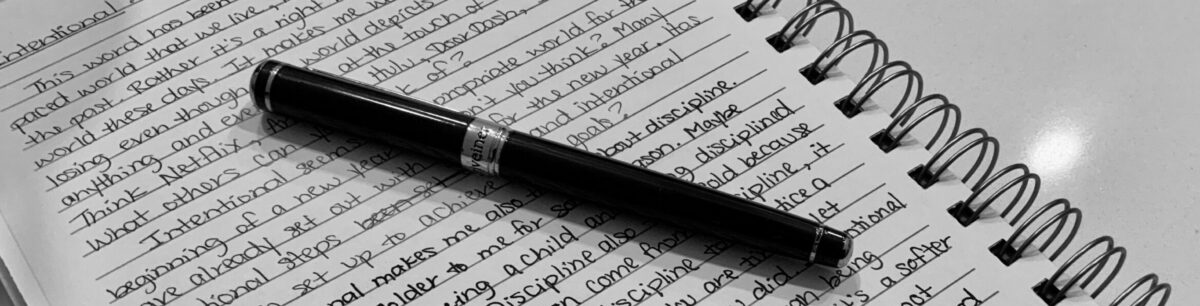
One underutilized tool for leaders is keeping a journal. Not typing notes into a phone or laptop—but physically writing in a journal with a physical pen and paper.

The physical act of writing slows down the mind automatically.

It creates space for reflection, and helps leaders process their experiences, challenges, and decisions in a deeper way.

It allows leaders to know and understand their unique perspectives. Which in turn will enhance their decision making every day.

A leader’s unique perspective is the source of creativity and competitive advantage.

In today’s AI world, tapping into creativity and having a competitive advantage is paramount.

Without slowing down and using journaling as a tool, we lose the art of listening to ourselves and our innate wisdom.

How do you create a discipline of journaling?

  1. Don’t over complicate it!
  2. Buy a journal.
  3. Set aside 15 minutes of uninterrupted time either at the beginning or end of your day to journal.
  4. Block that time on your calendar!
  5. Close your computer.
  6. Silence your notifications on your phone.
  7. Set a timer for 15 minutes.
  8. Write.

“Ok, great”, you might say. “But, what in the world do I write about? Especially when this feels like a weird, new thing to do?”

Great question!

Journal Prompts for Leaders.

Pick one to get started. What you journal about could either be personal or professional.

  1. What has been at the forefront of my mind today?
  2. What is keeping me up at night?
  3. What has been a common theme this week/last week?
  4. What are my priorities? Do those priorities stack up against the work I’m doing and meetings I’m attending?
  5. What needs to change?
  6. What am I missing?
  7. What is a circular thought pattern I’m having that I can’t find a solution?

Bonus Tips:

  1. Let yourself write whatever comes to mind.
  2. Do not have an agenda.
  3. No judgements in what you write about or don’t write about.
  4. Let the writing flow.
  5. Don’t be surprised if you start writing about one topic and you finish on another topic.
  6. Trust the process.
  7. Trust that whatever you write down is exactly what needed to be written and reflected upon.
  8. You just might surprise yourself.

Asking ourselves questions and slowing down to reflect brings us back to what is meaningful, what we believe in, and overall gives us purpose.

And if leaders reconnect to their purpose, that purpose will flow through them to those they influence. <– this is motivating and inspiring! It will have a ripple effect on your team and those you work alongside.

And all of this is a great ROI!

Challenge: Commit to journaling 15 minutes everyday for a month. Then, reflect on how it helped and enhanced your leadership.

In a world where we feel like we can’t slow down, it’s often exactly what leaders need.

For more reasons to journal, check this blog post: 12 Reasons to Keep a Journal

How to Save Your First $1,000 Emergency Fund

How To Save Your First $1,000 Emergency Fund

Before aggressively paying down debt, it’s smart to build a small emergency fund. This $1,000 acts as a financial safety net. It protects your goals when life throws the unexpected your way, like a car repair or medical bill. With this cushion, you can handle surprises without derailing your progress.

Check out my recent personal story and why I was so thankful we had our emergency fund in place.

Why $1,000?

It’s enough to cover most small emergencies, giving you breathing room and reducing the temptation to reach for credit cards or loans.

3 Ways to Save Your First $1,000 Emergency Fund

1. Cut Back on Expenses:

  • Skip eating out for a month — potential savings: $250–$500
  • Have a “no spend” month (necessities only) — potential savings: $150–$250
  • Pause online shopping — potential savings: $200+
  • Discontinue subscriptions (streaming, etc.) — potential savings: $90 – $100

2. Side Hustle for Extra Cash:

  • Babysitting — $15–$20/hour
  • Dog walking — $15–$25/hour
  • Rideshare driving — $18–$25/hour
  • Freelance work (writing, design, admin) — $20–$40/hour
  • Grocery or food delivery — $15–$25/hour

3. Sell Stuff You Don’t Use:

  • Host a garage sale — potential earnings: $200–$500
  • Sell on Facebook Marketplace — potential earnings: $50–$300
  • List items on eBay or Poshmark — potential earnings: $50–$200

Putting It All Together:
Combine strategies — cut back spending, pick up a short-term side hustle, and sell unused items. You could reach your $1,000 goal in as little as 4–6 weeks.

Bottom Line:
Your first $1,000 emergency fund is your buffer between life’s surprises and your financial goals. Build it fast — and watch your confidence grow as you tackle your debt next. This will build momentum as you tackle your next financial goal!